Animal Massage Therapy
US$395.00 Original price was: US$395.00.US$67.00Current price is: US$67.00.
- 30 day money back guarantee
- Instant access
- Customer service available 24/7
- Downloadable Audio & PDF materials
- 100% Secure Payment

Certification
Accredited courses written by
experienced animal educators.

Flexibility
on any device.

Satisfaction
30-day satisfaction guarantee.
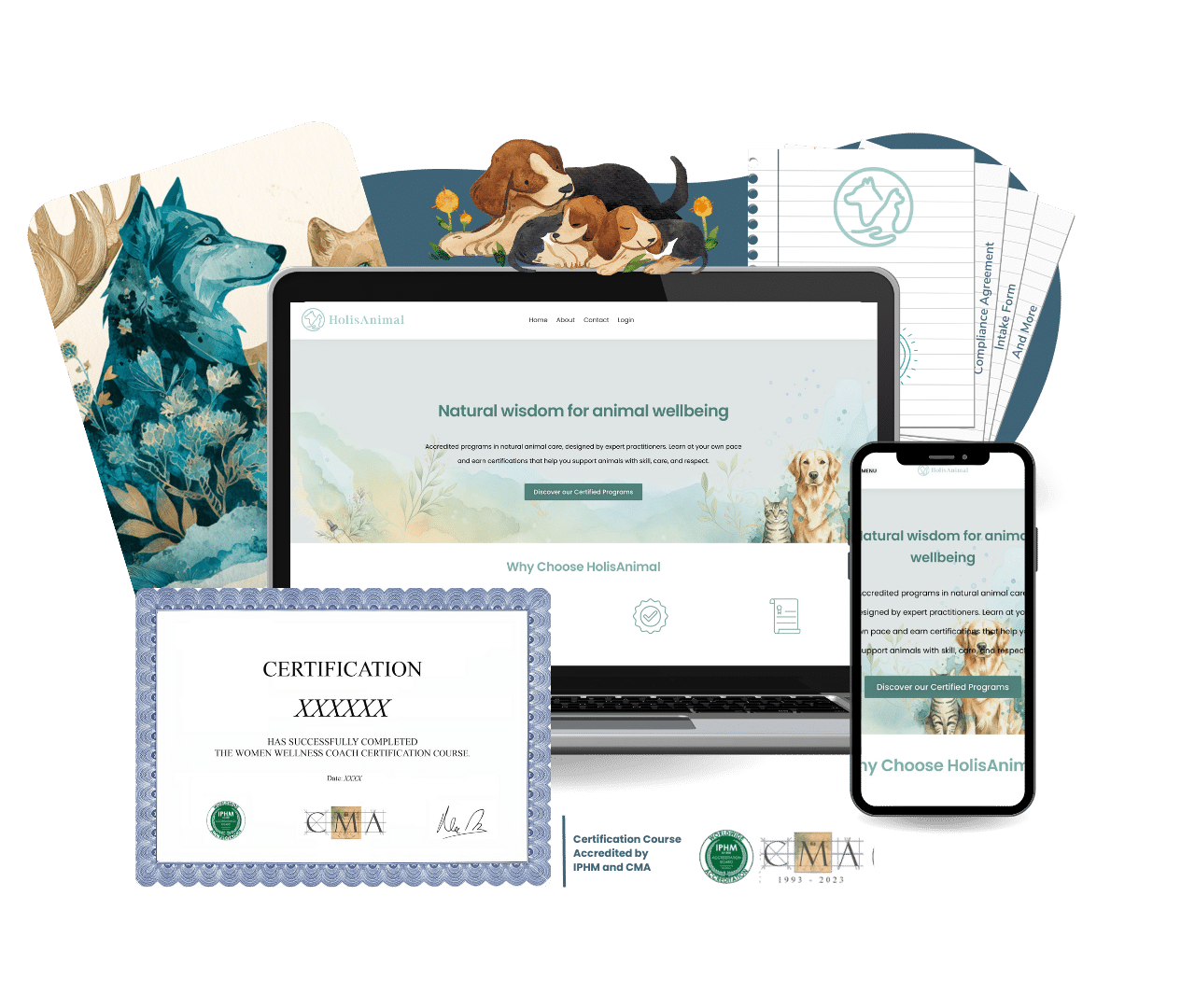
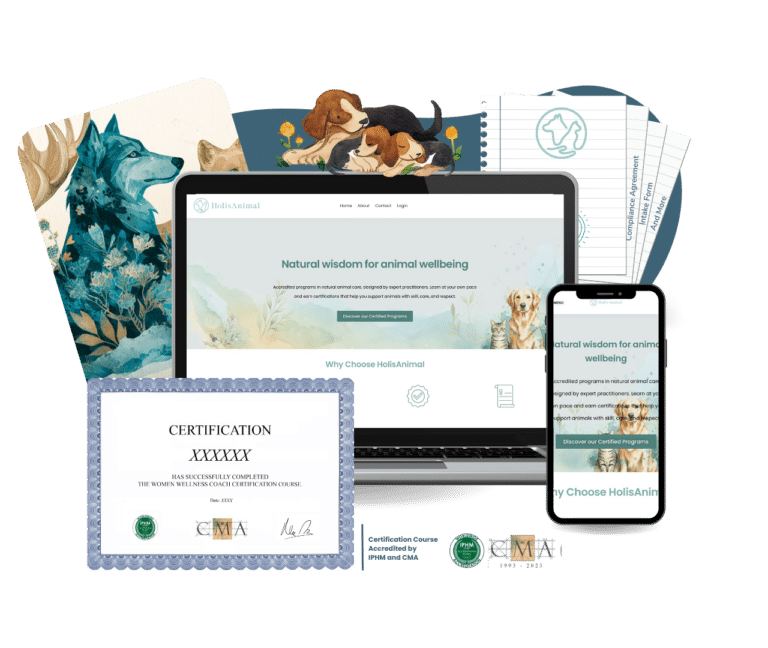
Access Your Training Course Now
- Online training at your own pace and in your own time
- Meet other students, get access to a private forum
- Compatible with computers, tablets, or mobile devices
- Certified by 3 international accreditation bodies
- Included: The Essential 'Launch Your Business' Starter Pack
- Unlimited lifetime access
- Contributing towards Non Profit Organizations

Well-being and connection with the world of animals
The training prepares you for a career as an animal massage practitioner. The program consists of eight modules combining theoretical teaching and practical case studies, in which the protocol for treating the animal is explained to you.
Several practical activities are also included in the modules, allowing you to refine your understanding and record your thoughts. We also invite you to try out the massage techniques you have studied so that you can experience their benefits for yourself. Each module also includes a quiz to test your knowledge.
You do not need to be a professional wellness massage therapist to begin the training. However, practice will be the key to your success. We therefore recommend that you practice as much as possible on animals in your environment.
We are aware of our students’ professional and personal commitments. Therefore, the training allows you to study online at your own pace. There is no deadline to complete your course, and you can take the final exam online as soon as you feel ready. A minimum of 80% correct answers is required. If you fail, you can retake the exam at no additional cost.
Our e-learning platform is designed to be intuitive and conducive to learning. A private forum is available for you to ask questions and interact with other students. You will also have access to a membership directory, which is ideal for building a local professional network.

Animal massage: physical and energetic communication
More and more of us consider our pets to be true members of the family. Attentive to their physical and emotional well-being, we want to offer them the best possible quality of life. And if we humans sometimes get massages, why not do the same for our beloved four-legged animal companions?
Animal massage is part of a holistic approach that involves paying attention to, respecting, and listening to their daily needs. It improves flexibility, aids recovery after injury or birth, relieves certain chronic joint or muscle pain, reduces stress and anxiety—including that of their human—and strengthens the emotional bond between the two.
Because well-being is a whole. While the physical and emotional spheres are crucial, the vibrational aspect is just as important. That’s why our training is based on ancestral practices such as traditional Chinese medicine, Ayurveda, and Reiki, as well as more modern approaches such as the TTouch and Masterson methods, which take into account the overall energy of each being.
The organs of the body are connected to each other by nerve pathways, which are themselves duplicated by meridians, which are energy channels. An imbalance, whether physical, emotional, or environmental, disrupts the animal’s overall well-being. By massaging specific areas located on these meridians and practicing energy impositions, the practitioner restores the precious balance.
Our training is truly unique in its holistic approach, combining care, intuition, and active listening.
The profession of Holistic Animal Massage Practitioner
Animal massage practitioners are wellness professionals dedicated to the world of animals, like animal naturopaths and animal lithotherapists. They use gentle, natural techniques to relieve muscle tension and relax the animal psychologically.
They also play an educational role with owners in the sense that massage can prevent the onset of disease and improve the living conditions of elderly or already sick animals. Their professional and holistic approach encourages owners to take better care of their animal’s overall well-being.
The profession of animal massage therapist is a rewarding one, at the crossroads between care and relationship: a bond of trust and listening between the practitioner and their animal and human clients. Each session is an encounter, a subtle reading of the animal’s body language, a silent but oh-so-attentive listening to another living being.
Empathy, patience, observation, and intuition are required, not to mention a delicate touch and a deep respect for living beings.
A massage session lasts on average between 45 minutes and an hour, although this time may be shortened depending on what the animal is willing to receive from the masseur according to its age, health, and mood at the time!
Professionals set their rates based on several criteria: travel expenses, size, and specific needs of the animal. Large animals such as horses often require more time and technical skill, which justifies a higher price than for cats and small dogs. As a guide, expect to pay between €60 and €100 per session.
Please note that this training does not prepare you for a career as an animal osteopath or animal physiotherapist. These professions require advanced studies, as these professionals perform structural manipulations that animal massage therapists do not.
Finally, animal massage therapists are not veterinarians. They are not qualified to make medical diagnoses or to interrupt or modify treatment. However, they do cooperate with other professions in the world of animals (veterinarians, dentists, groomers, trainers, farriers, osteopaths, breeders, shelters, zoos, pet stores, animal feed stores, etc.), and do not hesitate to refer an animal owner to another professional if necessary and/or if the request exceeds their field of expertise.

Do animals like to be massaged?
Most animals enjoy being massaged. Already sensitive to caresses and cuddles with their humans, they derive many additional benefits from it, just like us.
Massage relieves physical tension in particular. Animals can also experience physical discomfort, for example after more intense physical exertion than usual. Older animals, like humans, can suffer from osteoarthritis. For them, massage is a real bonus in soothing pain and restoring comfort and mobility.
Massage is also beneficial for physical recovery after surgery. Of course, wounds are not massaged directly, but helping the rest of the body to relax supports the self-healing process, particularly by removing cellular waste and excess lymph.
For animals that compete, massage is part of the preparation protocol, just like diet and athletic training. For example, competition horses, such as those in the , as well as agility dogs, generally enjoy pressure, effleurage, and other muscle mobilization techniques.
Some animals are also more anxious or stressed than others. Their emotions are still too often overlooked, even though animals perceive the world primarily through their senses, which are much more developed than ours, and through their emotional feelings, whereas we humans intellectualize our environment.
Several factors can cause psychological disorders: a change of location such as moving house or going on vacation, the arrival of a newcomer (animal or human) in the home, an owner who is themselves anxious or stressed, or the aftermath of trauma, as is often the case with animals from shelters. Massage provides them with deep relaxation, to the point that they may fall asleep during the session. The more an animal is used to being massaged, the more quickly it will relax under the masseur’s hands.
Some animals may not like to be touched, particularly on their ears, tail, or sides, because they have been abused or because they see humans as a threat invading their personal space. However, with a lot of patience and time, it is possible to reestablish a soothing contact, starting with a few gentle pressures or strokes. These specific techniques, as well as the precautions to be taken, will be discussed in detail during the training.
Finally, massage is an excellent way to strengthen the connection between animals and humans. It becomes a special time, filled with attention, love, and presence for one another. For apathetic or aging animals, massage is a good way to revive their joie de vivre.
This warm moment also allows you to better understand your pet: what it likes, areas to avoid, and its subtle nonverbal communication. A precious bond of trust is then established, which will be essential for getting through more difficult situations together, whether for the animal (vet visits, the loss of a four-legged friend, etc.) or for the human (professional difficulties, separation, illness, etc.).
Massage therefore plays a key role in the human-animal relationship and in the physical and psychological well-being of the animal.

Which animals can receive massage?
Wellness massage is beneficial for older, sick, convalescent, and athletic animals, as well as sedentary animals, to combat the harmful effects of lack of physical activity. That said, an animal does not need to be unwell to receive a massage; it is a unique moment of bonding and relaxation that is beneficial for everyone.
All animals can receive a massage, of course with the precautions specific to their species and training.
This includes:
✅ Common pets such as dogs and cats.
✅ Large animals such as horses and donkeys.
✅ Unusual large pets: llamas, vicuñas, camels, dromedaries, etc.
✅ Farm animals: cows, pigs, sheep, goats.
✅ Small animal companions: rabbits, hamsters, guinea pigs, and other rodents.
✅ Birds: chickens, ducks, geese, parrots, tame crows, mandarin ducks, canaries, parakeets, etc.
✅ Reptiles: turtles, geckos, iguanas, lizards… and even snakes!
Please note, however, that most of these animals require specific experience, supervision, and attention. The training therefore focuses mainly on dogs, cats, and horses, although you are free to adapt the techniques learned to other species, always keeping in mind your safety and that of the animal.
What to expect from the training?
The training prepares you for a career as an animal massage practitioner. The program consists of eight modules combining theoretical teaching and practical case studies, in which the protocol for treating the animal is explained to you.
Several practical activities are also included in the modules, allowing you to refine your understanding and record your thoughts. We also invite you to try out the massage techniques you have studied so that you can experience their benefits for yourself. Each module also includes a quiz to test your knowledge.
You do not need to be a professional wellness massage therapist to begin the training. However, practice will be the key to your success. We therefore recommend that you practice as much as possible on animals in your environment.
We are aware of our students’ professional and personal commitments. Therefore, the training allows you to study online at your own pace. There is no deadline to complete your course, and you can take the final exam online as soon as you feel ready. A minimum of 80% correct answers is required. If you fail, you can retake the exam at no additional cost.
Our e-learning platform is designed to be intuitive and conducive to learning. A private forum is available for you to ask questions and interact with other students. You will also have access to a membership directory, which is ideal for building a local professional network.
Discover the detailed program:
Module 1: Introduction to massage and animal sensory perception
- The human world and the animal worlds.
- What massage is and the different types of massage.
- What massage is for animals.
- Why massage animals.
- The energetic approach to animal health.
- Precautions and contraindications.
- A sample questionnaire to prepare for the session.
Module 2: General advice on animal massage, preparation for the massage therapist, the energetic approach (TCM and Ayurveda)
- General advice for massaging all types of animals.
- Specific advice for each category of animal.
- Mental, physical, and energetic preparation before massages.
- The establishment of rituals and the importance of massage intention.
- The theoretical foundations of the energetic approach in TCM.
- The cosmogony of TCM.
- The definition of “Qi,” Ying and Yang, the Three Treasures, the Three Burners, the Five Elements theory.
- The main meridians and acupuncture points.
- The foundations of the energetic approach with Ayurveda.
Module 3: Basic knowledge of animal anatomy, physiology, and behavior before massaging them
- An introduction to animal anatomy; the differences between mammals and non-mammals, etc.
- Some basic animal anatomy vocabulary.
- The main anatomical features to know for each category of animal (dogs, cats, rabbits, birds, horses, reptiles, etc.).
- An introduction to animal physiology with the different systems (cardiovascular, respiratory, digestive, endocrine, urinary, etc.).
Module 4: The skin-visceral relationship, shiatsu, the first relaxation massage, emotions, and meridians
- The skin-visceral relationship, i.e., massage that connects the outside and the inside, the skin and the organs.
- An introduction to relaxation sessions using shiatsu.
- The difference between shiatsu and acupressure.
- Techniques specific to shiatsu.
- The shiatsu session.
- Relaxation as the starting point for any massage or treatment (and healing): a typical session step by step.
- Massages that are mindful of the connections with the meridians and focus on specific acupuncture points.
Module 5: Acupressure in detail, causes and factors of diseases in TCM
- Acupressure in detail with the eight principles and five causes of disease.
- Constitutional factors according to the elements in TCM.
- A detailed and explained description of the meridians with associations and metaphors, and a list of the main points to massage according to imbalances.
Module 6: Meridians and acupuncture points (continued), the acupressure session, essential points
- The 12 celestial points of Ma Dan Yang, to be massaged in a specific order.
- The sequence of meridians and specific acupuncture points.
- The Shu points on the back.
- The list of essential points to know.
- How to respond effectively to all kinds of indications by massaging one or two essential points for each health problem.
Module 7: The Tellington-TTouch method.
- The theoretical basis of TTouch.
- The origins of TTouch with positive thinking and the importance of the Feldenkrais method.
- How TTouch works and its results on animals.
- The nine key points of TTouch (basic circle, degree of pressure, speed of circles, etc.).
- Safety tips for TTouch.
- Description of some TTouch maneuvers: shell, python, lying leopard, clouded leopard, raccoon, etc.
- The confidence course, a series of simple and fun exercises designed to help dogs and horses gain confidence and improve their balance and coordination.
Module 8: The Masterson Method, energy healing according to Luc Bodin, Reiki
- The origins of the Masterson method.
- The importance of listening to animals’ responses in the Masterson approach.
- The basic principles of the method for massaging horses.
- The setup, the best conditions for practicing the technique, etc.
- The different techniques of the Masterson Method.
- Introduction to the approach of energy healing on animals by Luc Bodin.
- The energetic perception of the aura and chakras in animals.
- The stages of energy healing using techniques such as netting, handholds, etc.
- A typical energy healing session for animals according to Luc Bodin’s approach.
- Introduction to Reiki and the course of a session for animals.


Your name on a certificate
Each certification is accredited by top organizations like IPHM, CMA and CPD ensuring you meet the highest standards in holistic practices.

HolisAnimal FAQ
Welcome to HolisAnimal, the online academy for holistic animal care and natural wellbeing. Below you’ll find answers to our most frequently asked questions.
To enroll in a program, simply select the course you wish to join and complete your secure payment online. Once your payment is confirmed, you’ll receive an email with your login details. You can then access your training immediately.
You’ll have lifetime access to all your purchased courses. Study at your own pace, from anywhere, on any device
Yes. All HolisAnimal training programs are fully online. With your login, you can access your materials from any computer, tablet, or smartphone, as long as you have an internet connection.
Yes. We offer a 30-day refund policy from the date of purchase. If you’re not satisfied with your program, simply email support@holisanimal.com within 30 days to request a full refund.
Each course includes downloadable study guides, reading materials, audio and in some cases, video content. You can review these materials as often as you wish.
If you experience issues downloading or opening materials, try clearing your browser cache or using a different browser. If the issue persists, contact our support team at support@holisanimal.com for assistance.
No prior experience is required. Our programs are suitable for anyone passionate about holistic animal care, whether you’re a pet owner or aspiring practitioner.
No. HolisAnimal provides holistic and educational training programs designed for practitioners and animal carers. They do not replace professional veterinary care or constitute veterinary advice.

Start Your 30-Day Trial Today!
Unlock the Power of Animal Massage Therapy — Completely Risk-Free!
Sign up for our Animal Massage Therapy Certification today and enjoy our 30-Day Money-Back Guarantee. If you don’t experience the benefits of this transformative therapy for animals within the first month, we’ll gladly refund your investment — no questions asked.